Micro-Cut vs. Cross-Cut: Which Shredder Level Does Your Law or Medical Practice Actually Need?
If you’re weighing up a new shredder (or a shredding contract), the micro-cut vs cross-cut shredder question can feel like a technical detail. In a legal or medical setting, it’s rarely “just admin”.
A single page can hold identifiers, case strategy, Medicare details, or notes that should never find daylight. The right cut type reduces the risk of reconstruction, limits who handles sensitive paper, and makes your disposal process easier to defend if you’re audited or queried.
1. Cross-cut shredding: Solid for routine confidential paper
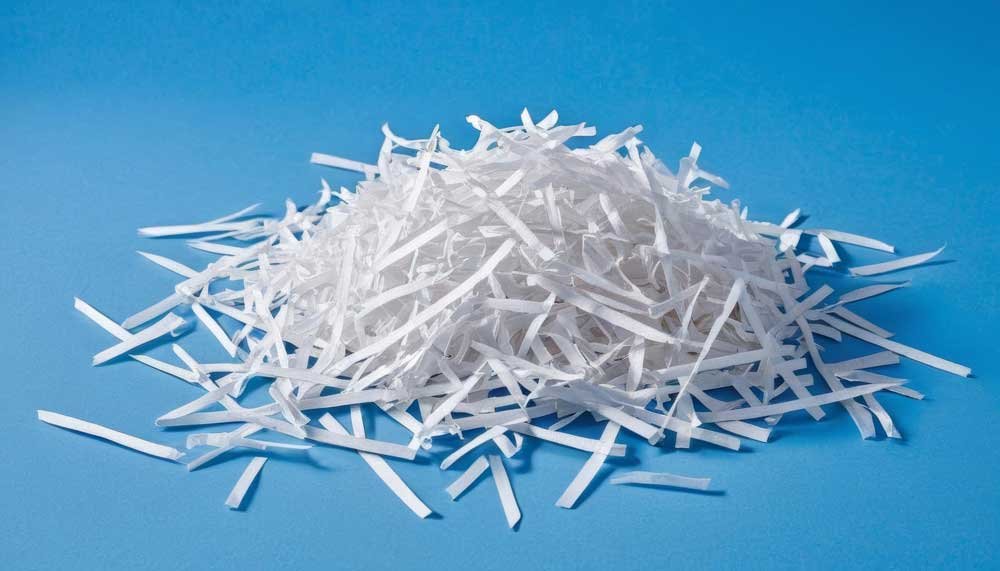
Cross-cut shredders slice paper into short confetti-like pieces.
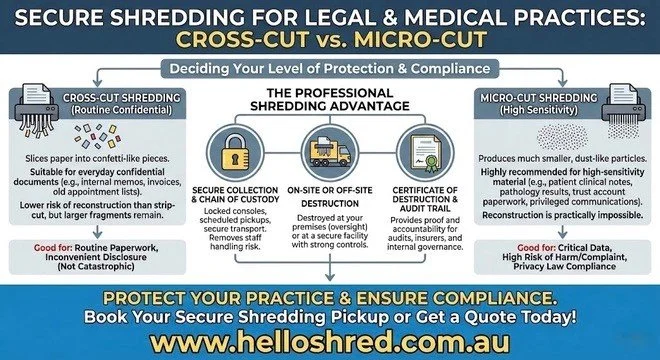
For many offices, cross-cut is a sensible baseline for everyday confidential documents: old appointment lists, internal memos, supplier invoices, and general correspondence.
Where cross-cut can fall short is volume and sensitivity. If your clinic is clearing out years of paper records, a small office shredder becomes a bottleneck.
And for documents that include multiple identifiers (name, address, date of birth, Medicare number), larger fragments may still be worth targeting, especially if waste is handled by several people on the way out.
2. Mcro-cut shredding: smaller pieces, higher confidence
Micro-cut shredders produce much smaller particles than cross-cut. That size difference changes the risk equation.
Reconstruction becomes far less practical, and the output is harder to sift through even if a bag splits or ends up in the wrong stream.
Micro-cut is often the safer option for high-sensitivity material: patient clinical notes, referrals, pathology results, trust account paperwork, privileged communications, and files where a single page could cause real harm if exposed.
If your practice relies on casual “shred as you go” habits, micro-cut can also compensate for the reality that not every staff member treats disposal with the same care.
Why cut type matters for privacy and professional duty
Most practices don’t lose information because a hacker breaks in. The more common failure is less obvious: paper left in an open recycling bin, boxes stored in a hallway, or a staff member taking bags of shreddings out after hours.
Australian privacy law expects organisations to take reasonable steps to protect personal information and to destroy or de-identify it when it’s no longer needed.
Health information is especially sensitive, and professional bodies have flagged real-world fraud linked to improperly discarded patient documents.
Shredder choice fits into that “reasonable steps” picture. If the cut you use still leaves legible fragments, you may be creating unnecessary risk for the sake of convenience.
So, should you go for cross-cut or micro-cut?
A practical way to decide:
Cross-cut suits routine confidential paperwork where disclosure would be inconvenient, not catastrophic.
Micro-cut suits material where disclosure could trigger a complaint, a notifiable incident, or genuine client/patient harm.
If you’re unsure, look at what’s on the page, not what the document is called.
Hire a paper shredding service in Australia:
Many clinics and firms start with a shredder, then move to a service once the volume rises or the compliance questions start.
A professional setup reduces staff handling and creates a repeatable process: locked consoles, scheduled pickups, secure transport, and documented destruction.
This is where chain of custody document shreddingmatters. You want a clear, traceable path from the moment paper enters a locked bin to the moment it’s destroyed. That traceability is hard to replicate with an office shredder and a wheelie bin.
For larger clean-outs, an on-site shredding service can be a good fit because paper can be destroyed at your premises while you retain oversight.
For ongoing weekly or monthly disposal, an off-site document shredding service often suits better, provided the handling controls are strong and well documented.
Proof and accountability: Get certificates and logs
A decent shredding service will issue records you can file away and forget until you need them. A certificate of destructionprovided by a shredding service gives you that paper trail, which can be useful for audits, insurer questions, or internal governance.
Protect your clients and patients with secure, documented shredding that’s built for legal and medical compliance. Book a pickup with Hello Shredor get a quote.
Also Read: Ecofriendly Paper Shredding: How Technology Facilitates Green Document Destruction
Frequently Asked Questions:
1) Do law firms need micro-cut shredding or is cross-cut enough?
Cross-cut is often adequate for routine administrative records, especially when the information is limited and your disposal process is tightly controlled. Micro-cut makes more sense when files contain privileged advice, negotiation positions, detailed financials, or identifying details that could be stitched together from larger fragments. If your firm handles matters where reputational damage would be severe, micro-cut (or outsourced destruction) is usually the safer call.
2) Is micro-cut shredding required for HIPAA compliance?
HIPAA is a US framework, so it doesn’t really apply for Australian practices. In Australia, privacy expectations focus on “reasonable steps” to protect and securely dispose of personal information under the Privacy Act and relevant state health records laws. Micro-cut isn’t mandatory, but it can be easier to justify as reasonable for highly sensitive health information, especially in busy clinics.
3) What is a certificate of destruction and do law/medical offices need one?
A certificate of destruction is written confirmation that documents were destroyed, usually with service dates and other identifying details. Many practices don’t “need” it in the strict legal sense every time, but it’s a practical safeguard. It helps show your organisation took disposal seriously, and it gives you something concrete to produce if questions arise.
4) Is on-site shredding more secure than off-site shredding?
On-site shredding can reduce transport risk because destruction happens at your premises. Off-site shredding can be just as secure when the provider uses locked containers, controlled access, and documented handling from pickup through destruction. The deciding factor is process quality. Ask how bins are secured, who handles them, and what records you receive.
5) How do shredding services maintain chain of custody from pickup to destruction?
A good service uses locked consoles or bins, logs collections, and restricts access during transport and storage. Some providers also issue destruction documentation as part of the service record. Under Australian privacy guidance, the idea is to take reasonable steps to prevent misuse, loss, or unauthorised access across the whole lifecycle, including disposal