How Long Should Australian Businesses Keep Records Before Shredding Them?
For most Australian businesses, the safest starting point is this: don’t destroy records until the required retention period has ended.
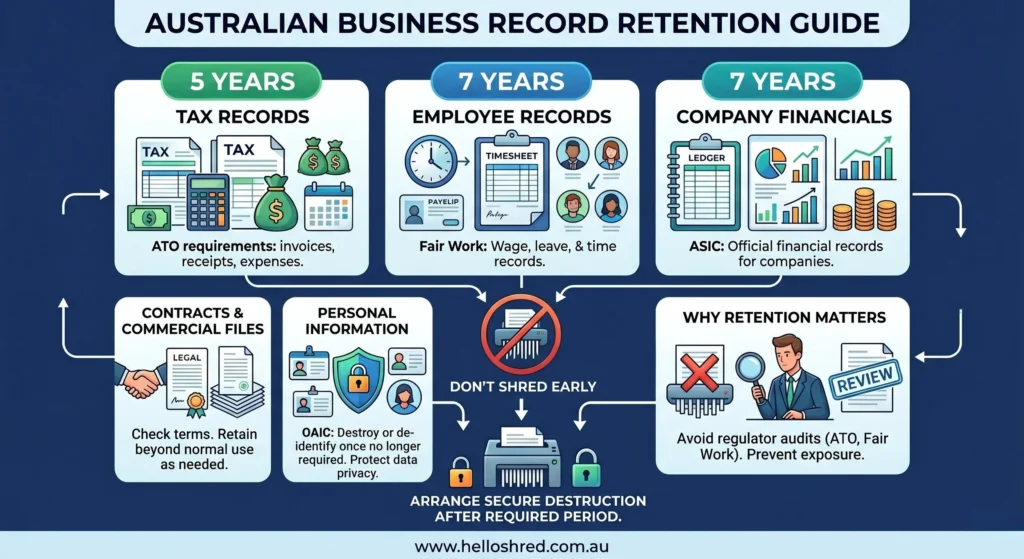
In many cases, tax records must be kept for at least five years, while employee pay and time records generally need to be kept for seven years. Companies must also keep financial records for at least seven years. Once records are no longer required, secure destruction matters just as much as storage, especially where personal, financial or commercial information is involved.
Record retention in Australia depends on the type of document, the laws that apply to your business, and whether a matter is still under review.
Why Retention Periods Matter Before Anything is Destroyed
Holding onto paperwork forever is not good practice. It increases storage costs, clutters offices, and leaves more sensitive information sitting around than necessary. At the same time, destroying files too early can leave a business exposed if the ATO, Fair Work or another regulator needs to inspect records later. The better approach is to keep records for as long as the law or business need requires, then arrange secure disposal and document shredding.
The OAIC also says organisations covered by the Australian Privacy Principles should take reasonable steps to destroy or de-identify personal information once it is no longer needed, unless another law requires retention.
The Records Businesses Commonly Need to Keep
A practical retention policy usually starts by sorting documents into categories. These are the main groups worth knowing about:
Tax and financial records Invoices, receipts, bank statements, payment records, expense claims and supporting tax documents often fall under the ATO’s five-year rule, though some records must be kept longer depending on the circumstance and period of review.
Employment records Wage, leave and time records generally need to be kept for seven years. These records must be legible, accessible and kept in a way that can be inspected if needed.
Company financial records ASIC requires companies to keep financial records for at least seven years.
Contracts and commercial files Supply agreements, client contracts and signed approvals may need to be retained beyond ordinary admin use, particularly where rights or disputes could still arise. A business should check the contract terms and any legal advice before disposal. This is a practical compliance step rather than a one-size-fits-all rule.
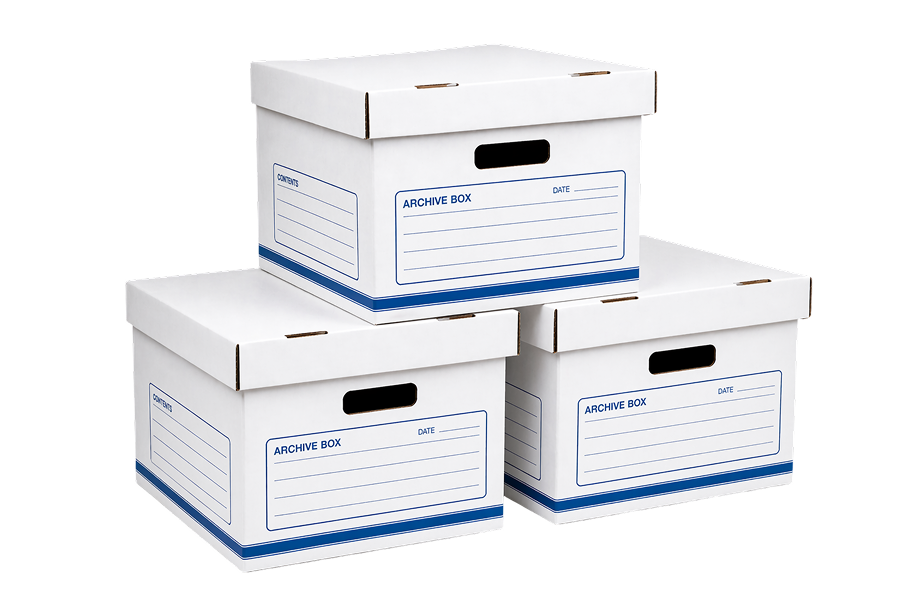
Personal information Customer forms, ID copies and sensitive correspondence should not sit in cupboards or boxes longer than necessary. Once there is no lawful or operational reason to keep them, secure destruction or de-identification should follow.
A business can shred records after the relevant retention period has expired and once it has confirmed the records are not needed for any review, audit, claim or dispute. The ATO notes that some records need to be kept longer than five years, including where review periods still apply. So, the calendar alone should not decide what goes into the shred bin.
In practice, a sensible destruction checklist looks like this:
Identify the document type
Check the minimum retention period
Confirm there is no ongoing audit, complaint or dispute
Separate routine waste from confidential material
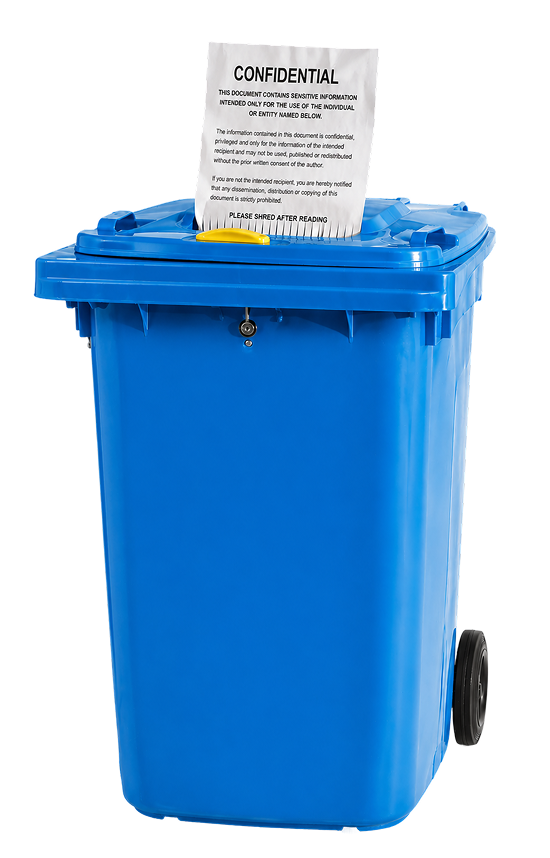
Use a secure destruction service rather than ordinary recycling for sensitive records
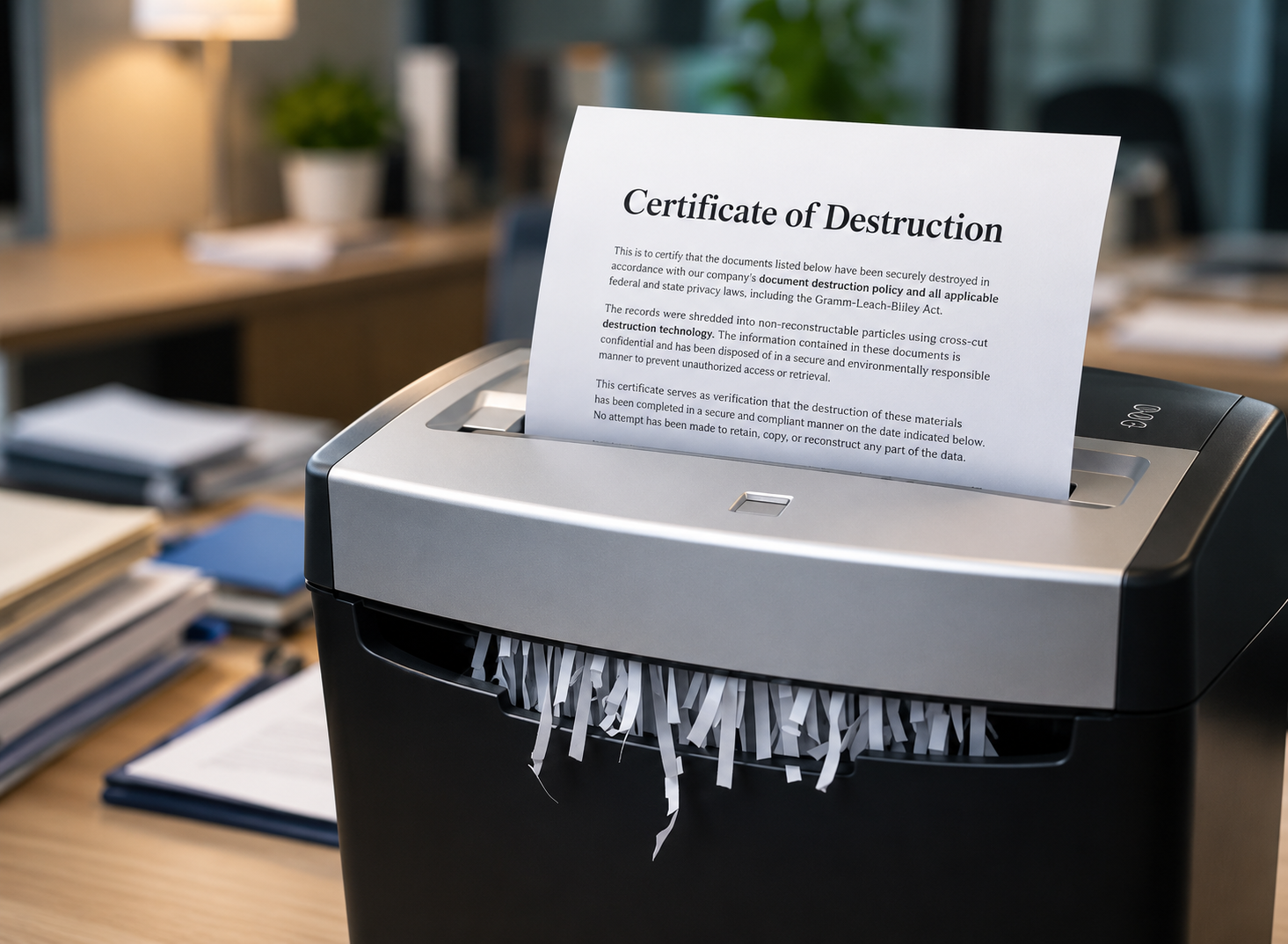
That final step matters. Professional paper destruction with a formal destruction certificate gives a business a record of what was destroyed and when. For many offices, that is far safer than sending confidential files to an unsecured bin. The same goes for a mobile shredding truck on site, regular console collections, or a once-off archive clean-out when a business is moving premises or clearing storage.
Choosing the Right Destruction Method
Not every business needs the same service. The best option usually depends on volume, sensitivity and how often documents build up.
On-site shredding at your premises suits businesses that want to watch the process and keep the chain of custody visible.
A one-off office purge works well during relocations, end-of-financial-year clean-ups or digitisation projects.
A scheduled destruction service is often the better fit for businesses that generate confidential paperwork every week or month.
Documented destruction with a certificate helps support internal compliance records.
Providers with strong safety and operational standards, including businesses that refer to recognised compliance frameworks, are often easier to assess than ad hoc operators.
Frequently Asked Questions
1. How long should most Australian business records be kept? Most tax-related business records are kept for at least five years, but some must be kept longer. Company financial records generally need seven years, and many employee records also need seven years.
2. Can I shred old employee files after five years? Not usually if they are part of wage and time records covered by Fair Work rules. Those records generally need to stay for seven years.
3. Is it fine to put confidential papers in recycling? For sensitive records, that is risky. Secure destruction is the better option, especially where personal or financial information is involved.
4. What is proof of destruction? It is written confirmation from a shredding provider that records were securely destroyed. Many businesses keep this as part of their compliance trail.
5. What if my business is being audited or dealing with a dispute? Keep the records until the matter is resolved and any required retention period has passed. Destroying them too soon can create avoidable problems.
For businesses across Sydney and beyond, keep records for the required period, review them carefully, then destroy them securely and with documentation. Done properly, shredding is not just about clearing space. It is part of good business hygiene.
Not sure whether your archived files are ready to be destroyed? Hello Shred can help your business arrange secure, compliant document destruction with flexible services that suit one-off cleanouts or ongoing collection needs.
A Certificate of Destruction is one of the most important documents your business can hold after a shredding job. Yet many organisations misunderstand what it actually guarantees. Getting this wrong can leave you exposed during a compliance audit or a data breach inquiry under the Privacy Act 1988 (Cth). Here is a clear-eyed look at what the certificate confirms and, just as importantly, where its limits lie.
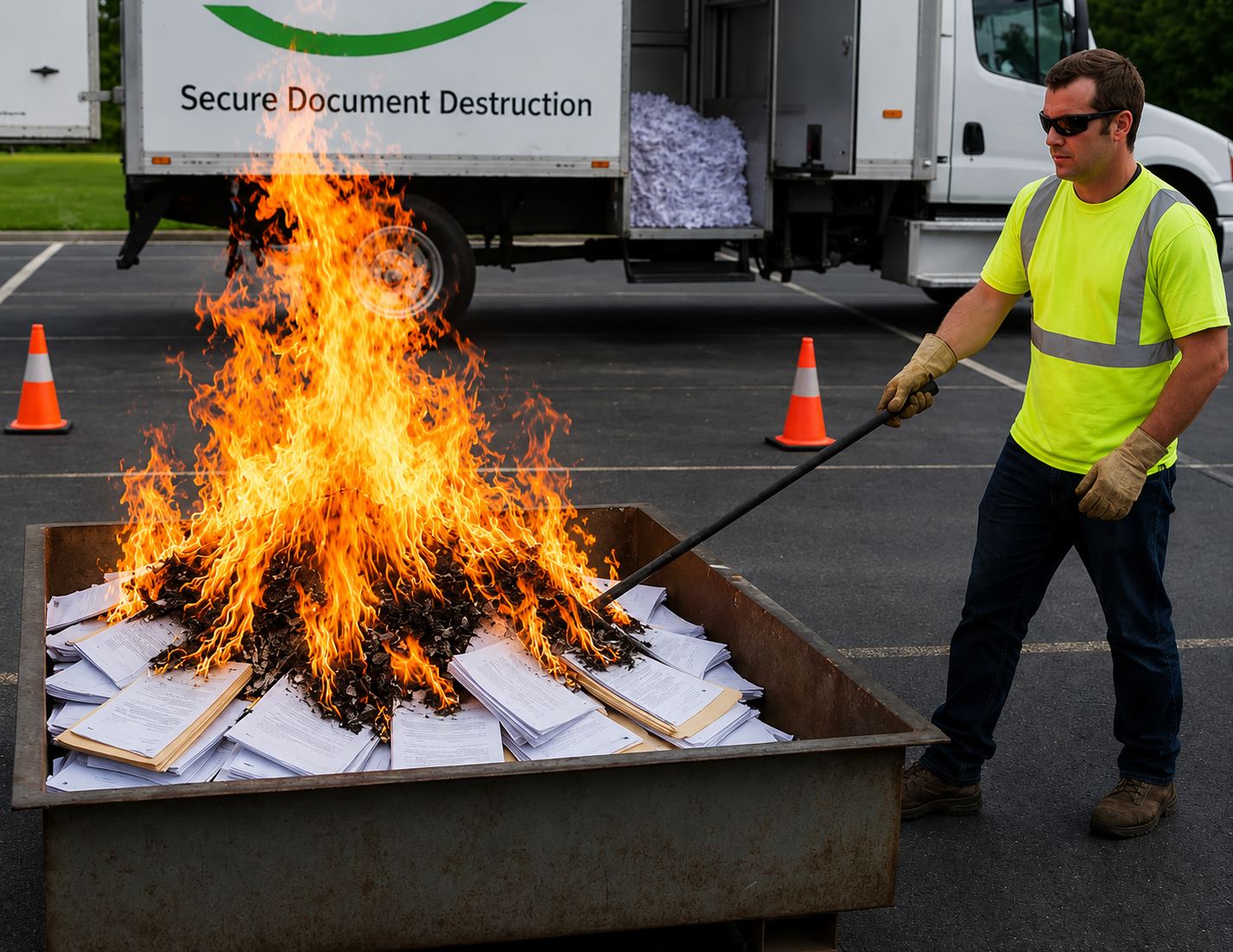
A quick burn can feel like the simplest way to clear out old paperwork. Yet for many households and small businesses, the safest approach is mobile document shredding services that destroy information on-site/off-site and leave far less to chance. Burning can create privacy gaps, safety hazards, and a mess of compliance headaches that only show up when it’s too late.
If you’re weighing up a new shredder (or a shredding contract), the micro-cut vs cross-cut shredder question can feel like a technical detail. In a legal or medical setting, it’s rarely “just admin”.
A single page can hold identifiers, case strategy, Medicare details, or notes that should never find daylight. The right cut type reduces the risk of reconstruction, limits who handles sensitive paper, and makes your disposal process easier to defend if you’re audited or queried.